Identify
The visitor recognises the practice area, type of matter and whom the firm serves.
Web design for law firms
A law firm's website should make clear which matters it handles, who handles them and how to request an initial consultation. I prioritise specialisation, professional profiles, signed content, privacy and measured contact, with a restrained hierarchy that conveys judgement without absolute promises or commercial pressure.
Authorship and reviewJavier Nache
BasisDirect experience and a related case study
Last reviewed
How I prepare and review contentA legal enquiry often begins with uncertainty, urgency or an important decision. The website should help identify whether the firm handles that type of matter and explain how the relationship begins, without promising outcomes or turning sensitivity into commercial pressure.
Visual identity matters, but trust is also supported by names, specialisation, signed content, contact details and a structure that does not hide essential information.
The home page presents the firm's judgement. Inner pages add depth to each area, professional or client type when there is sufficient content to support them.
A specialist professional may need a concise website. A firm with several areas, a team and publications needs another architecture. The quotation separates design, content and functions so the decision is clear.
Qualified contact
Legal conversion is not about accumulating clicks. It is about helping the person understand the basic fit and know which information to share safely.
The visitor recognises the practice area, type of matter and whom the firm serves.
The approach, professionals and content provide context about how the firm works.
The contact channel explains what will happen next and avoids false expectations about the consultation.
The form limits requested data and presents the relevant privacy information.
Legal searches are often specific. A practice-area page should explain the problem, scenarios and way of working in sufficient detail, always under the review of the responsible professional.
Articles can answer specific questions and connect to the right service. Authorship, date, updates and internal links help readers understand who is answering and where to continue.
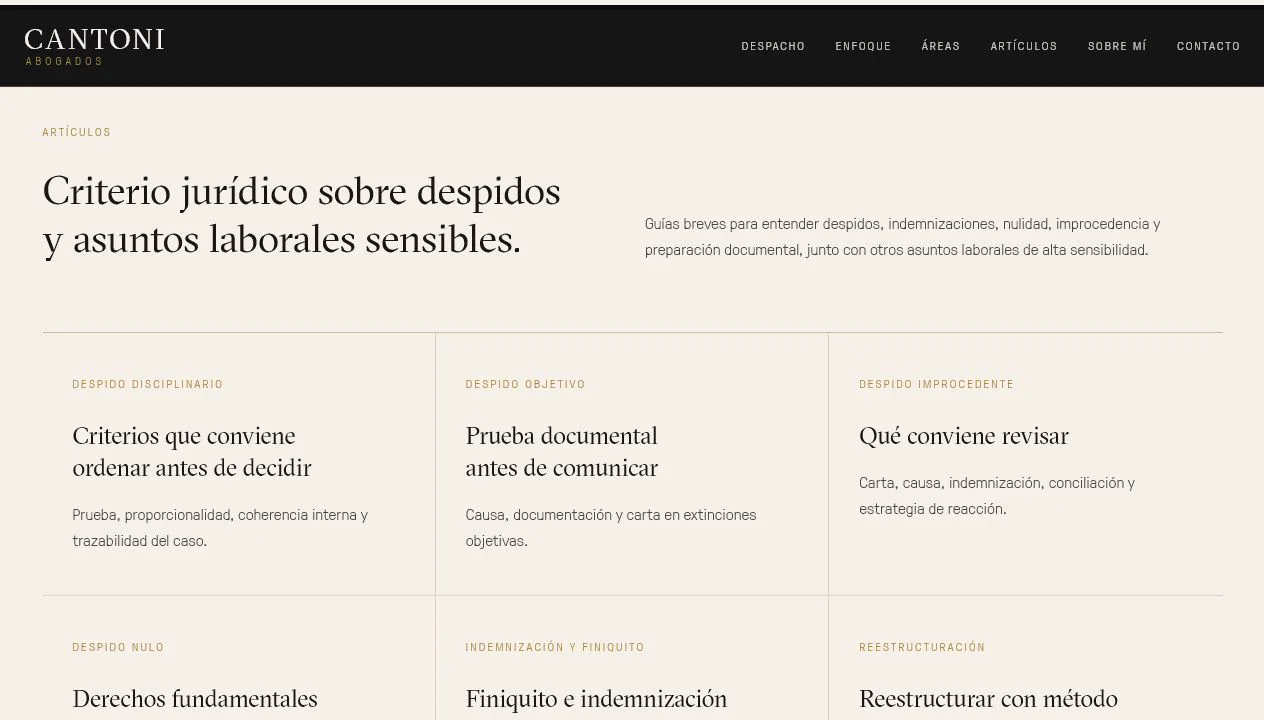
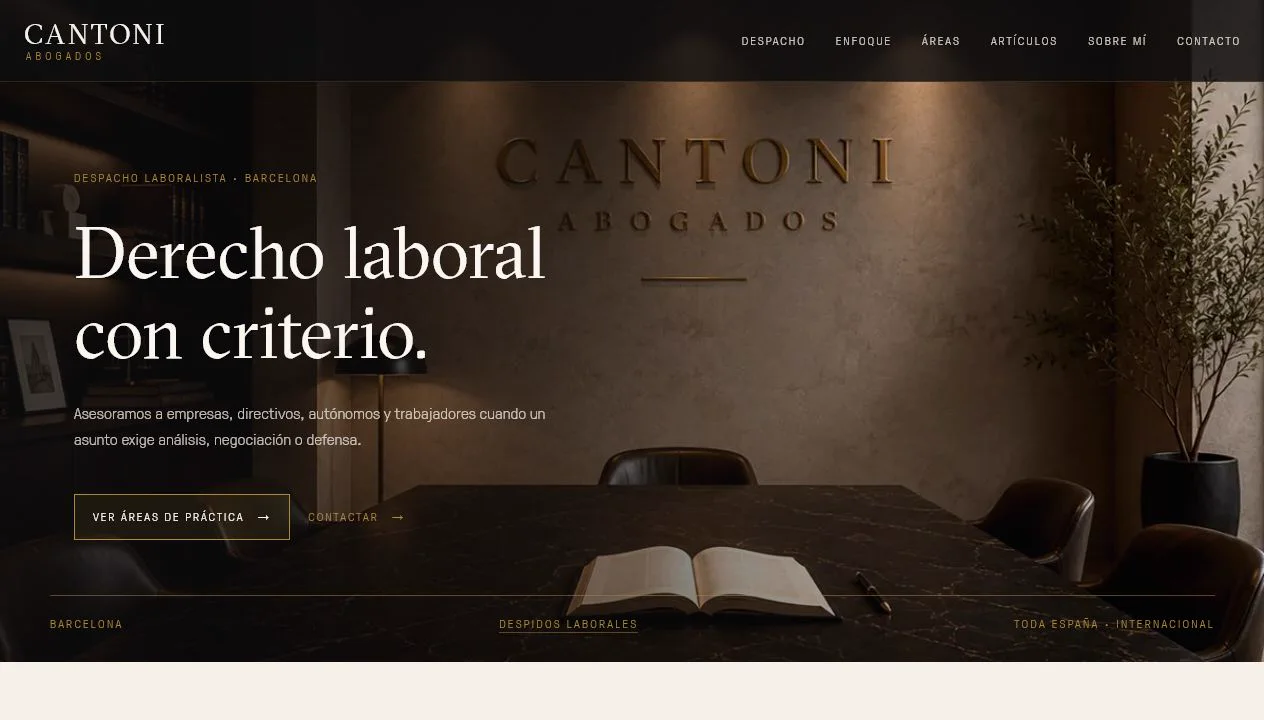
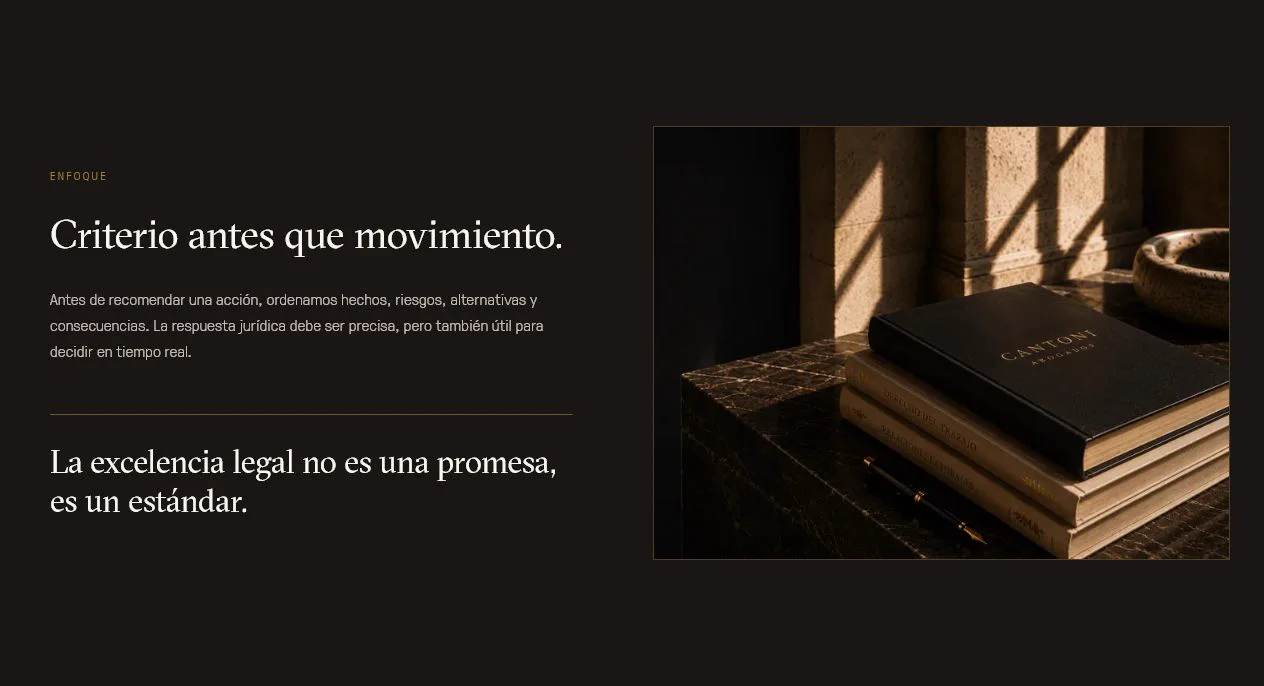
Real case study
The project created the website and complete brand book for an employment law firm in Barcelona. The restrained identity supports a structure focused on judgement, discretion and qualified contact.
The website presents the firm, its principles, practice areas and articles on employment matters. The closing section offers telephone, email and a form without breaking the measured tone of the rest of the experience.
View the full case study →I review whether the project starts from scratch or an active website. A renewal also includes URL inventory, preservation of useful content and required redirects.
It should identify the firm, responsible professionals, practice areas actually handled, client or matter type and contact route. It also needs legal information, privacy and careful handling of any submitted data.
They can help when they answer real questions with original content, clear authorship and professional review. They must remain current and connect to the firm's areas; publishing for volume without control can harm trust.
Yes. Before changing it, URLs, content, links, metadata and pages receiving visits should be inventoried. The renewal should preserve or redirect every useful resource and improve the structure without accidentally erasing its history.
The firm or responsible legal professional must validate the accuracy, currency and scope of the text. I can help structure, edit and present the content, but legal review remains with the specialist.
Tell me about the specialisation, team and state of the current website. I will prepare a clear proposal covering scope, content and migration.