Recognise
The visitor finds interior painting, exterior painting, maintenance or the specific speciality you offer.
Web design for painters and renovation companies
A website for painters and renovation companies should show specialities, completed work, service areas and a clear way to request a quotation. I prioritise real photographs, the scope of each service, process, local trust and fast contact so visitors with a specific need can assess your work and move forward.
Authorship and reviewJavier Nache
BasisDirect experience and a related case study
Last reviewed
How I prepare and review contentSomeone who needs a flat painted, damp repaired or commercial premises renewed does not want to decipher a corporate presentation. They want to recognise the service, see evidence of workmanship and confirm that you cover their area.
The website should answer those questions before asking for details. Real photographs, well-grouped specialities and a concise process explanation turn an anonymous visit into a better-prepared enquiry.
The structure can start with a single page and grow by service or project. The decision depends on how much work you need to explain and the searches that genuinely match your offer.
A concise, well-crafted website is better than a large structure with empty pages. The budget is matched to real content and leaves a foundation that can expand with new work.
A better-prepared enquiry
The goal is not to receive any message. It is to help someone check the fit and share the details you need to assess the work.
The visitor finds interior painting, exterior painting, maintenance or the specific speciality you offer.
Work, verifiable experience, reviews or a process explanation reduce uncertainty.
The service area confirms whether travel and project type fit.
The contact flow asks for the town, type of space, planned work and visual material where useful.
A painting or renovation company can be relevant for service-and-location searches, but every page must provide its own answer. A list of towns is no substitute for a real explanation of coverage, work type and availability.
Projects can also support local content when they explain what was done and where without revealing private data. Speciality pages allow greater depth on materials, common problems and process when there is experience to support them.
Real case study
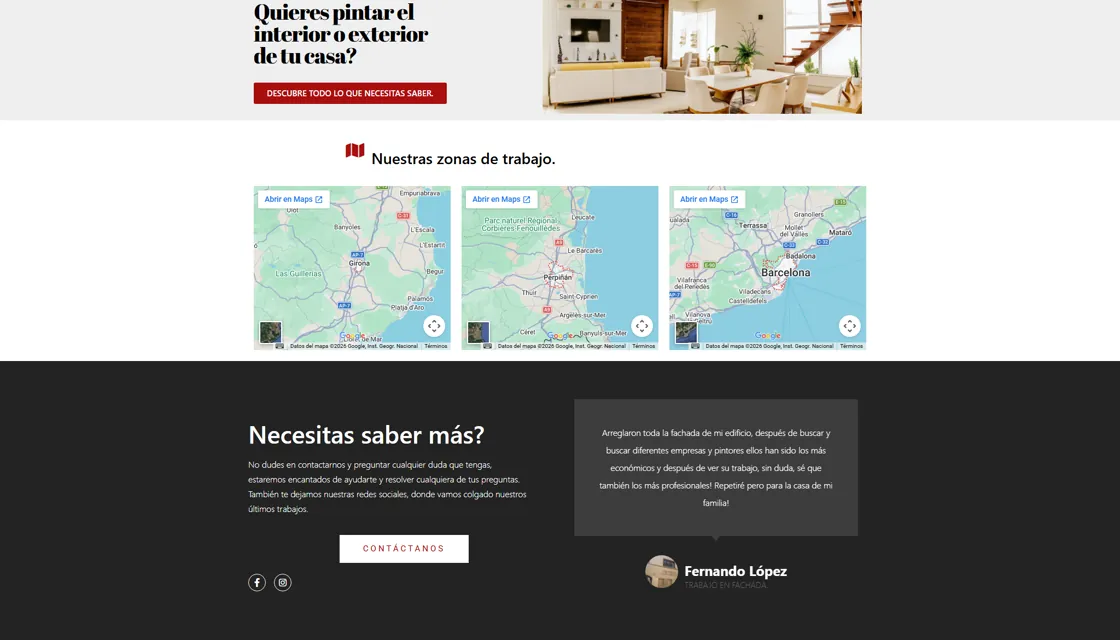
The corporate website presents a painting and maintenance company as a local business. It makes contact details, specialities, interior and exterior work, areas and reviews visible.
The commercial structure prioritises trust and direct access to WhatsApp. People can recognise the service, verify coverage and find several pieces of evidence before writing.
View the full case study →Before proposing pages, I review services, photographs, identity, areas and the current way enquiries arrive. Scope reflects the work required, not a fixed package for the sector.
No. A concise selection of real, well-explained work is better than a large gallery without context. If you have little material, we can prioritise services, process, area and contact routes.
It is useful to explain the genuine service area so visitors know whether they can request a quotation. Local pages only make sense when they add original information; repeating the same text for another town does not help.
It can collect useful details such as work type, town, approximate dimensions and photographs. Automatic calculation is advisable only when pricing rules are stable and can be explained without creating false expectations.
One page may be enough for a professional with a small number of services. If you offer different specialities, serve several client types or have projects to explain, a multi-page structure is usually clearer and easier to expand.
Tell me which services you offer, where you work and what material you have. I will reply with a clear, proportionate proposal.